
Why this belongs on the September review agenda
NIST's CSRC published a presentation page on 3 September for Tam Nguyen's 1 September 2026 session on multi-agent AI security. The description highlights a GSA approach combining knowledge engineering with threat modelling. It is a useful signal to examine the connections between agents, not only the security of each model. The checklist below is Securelay's engineering interpretation, not a reproduction of the presentation or a new NIST requirement.
Map the handoff, not just the model
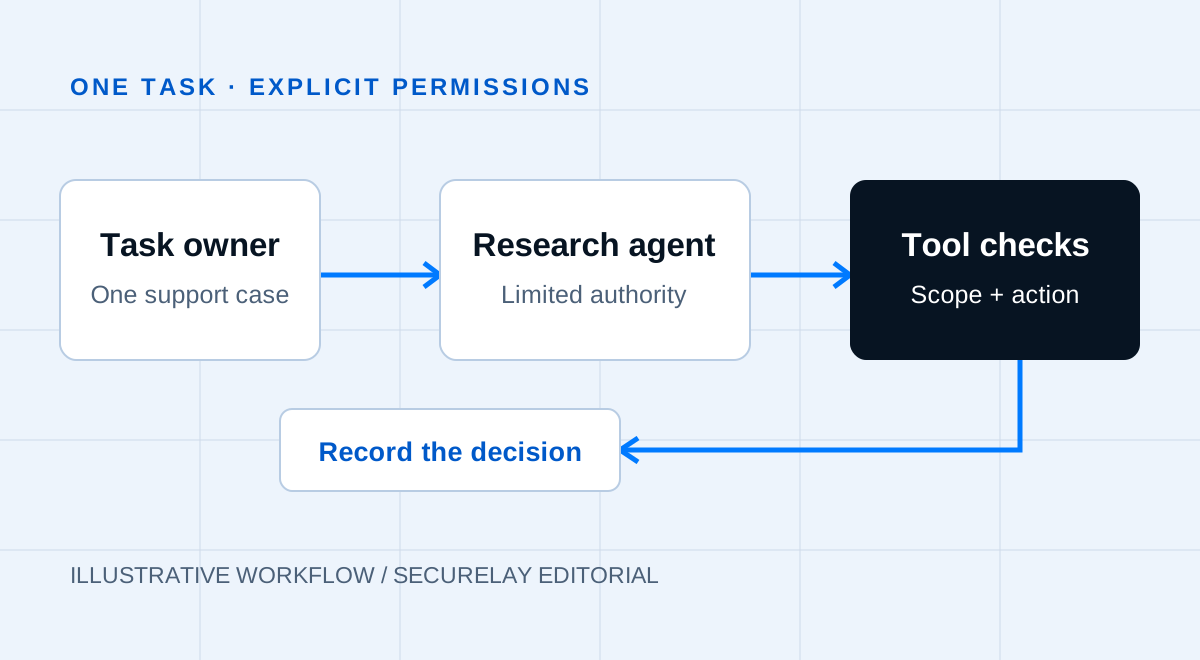
For a synthetic support workflow, imagine a triage agent passing a case to a research agent, which asks a tool for account details. Write down the identity, allowed action and permitted records at each handoff. An instruction from another agent should not silently become permission to read an entire customer account. Give the receiving service enough context to check the request independently.
Try three requests that should fail
Ask for another customer's case. Request an export when only a summary was approved. Retry a tool call after its grant expires. Define the expected refusal before testing. If a queue or fallback model changes the route, repeat the tests there. A successful first request does not demonstrate that the workflow respects its limits.
Keep the evidence useful without copying the payload
Our suggested review record includes the requesting workload, delegated task, operation, policy decision and a correlation identifier. Keep access credentials and personal data out of the routine evidence trail. Check whether an investigator can follow one task across services without granting them unrestricted access to source records. Record missing evidence as a gap rather than assuming the action was safe.
What to ask a vendor before approval
Ask which component enforces each permission, what happens when that component is unavailable, and whether direct tool calls can bypass it. Require a demonstration using synthetic records. Agree who owns workload identity, network restrictions, approval rules and incident response. These responsibilities may be split across several vendors.
Where Securelay fits
Securelay supports configured access decisions, protected data references and value-free audit records on connected routes. It does not replace agent orchestration, sandboxing or network controls, and it does not guarantee that a prompt is safe. Bring one agent-to-tool workflow to the review and identify the specific data decisions Securelay would enforce.